The Situation
Franklin was a small, lean team—just founders and developers. They had the backend built but no frontend, no wireframes, no user experience designed. I came in as the first and only designer.
The Problem
Traditional payroll is rigid:
- You get paid once or twice a month
- You have no choice in currency
- You can't access money you've already earned
Franklin's vision was to give employees complete control over how they get paid.
The Solution
A payroll platform where employees choose:
- What currency they get paid in (USD, Bitcoin, Solana, etc.)
- What proportion (e.g., 50% USD, 25% Solana, 25% Bitcoin)
- When they get paid—including streaming income (paid every minute, not every two weeks)
This lets people hedge their bets, access earned wages immediately, and have true ownership over their compensation.
What I Designed
I owned the entire product design from zero.
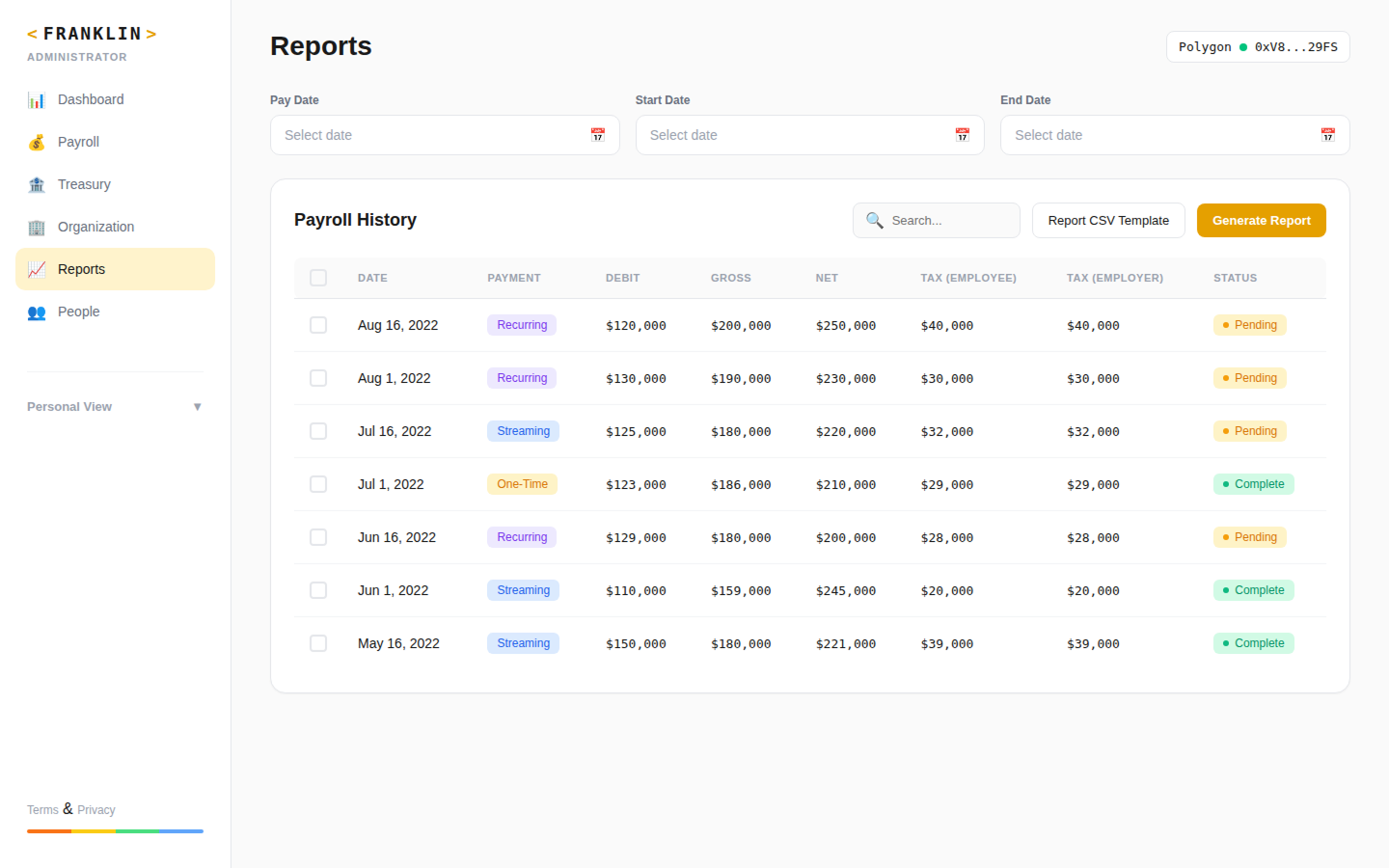
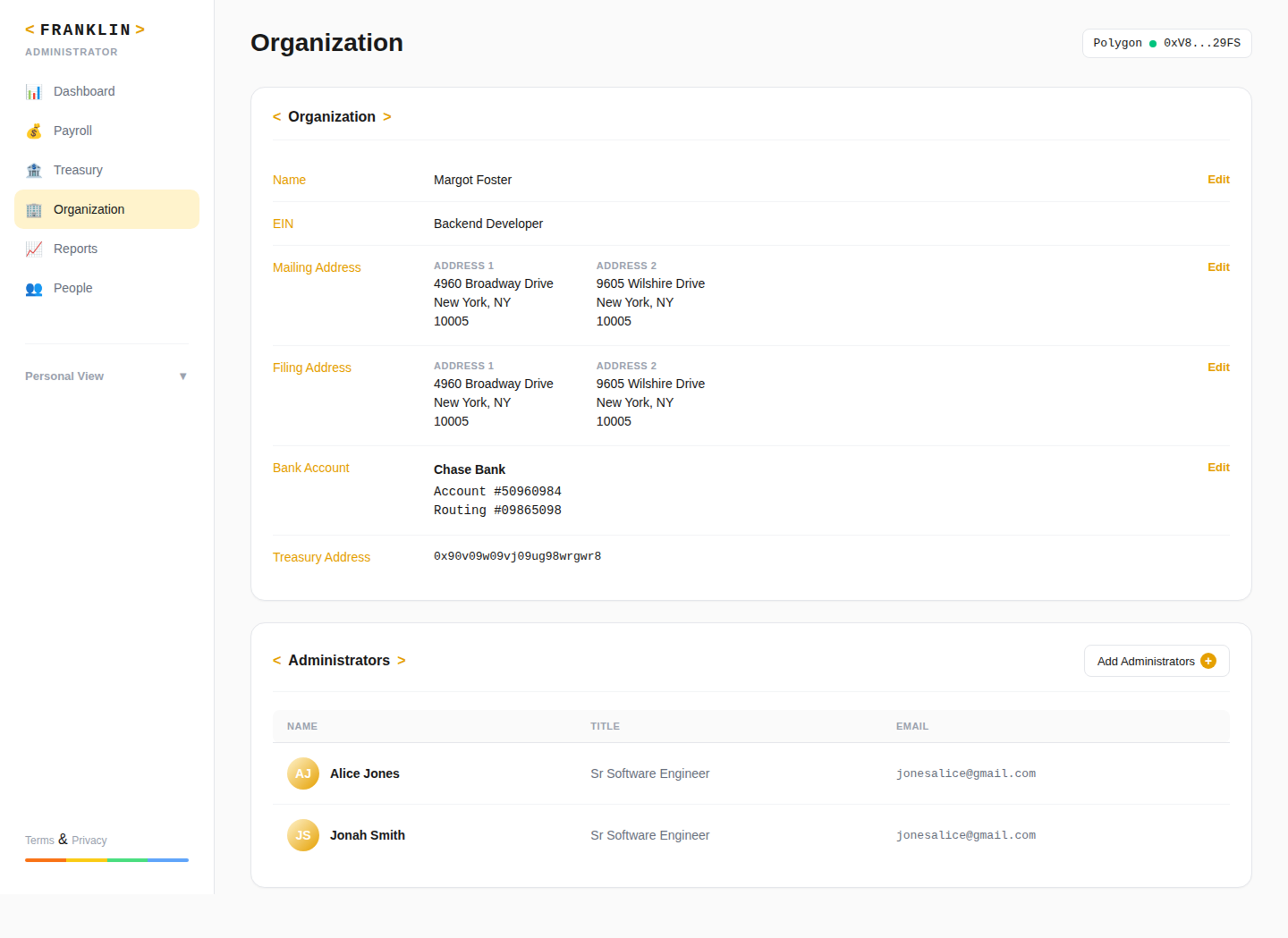
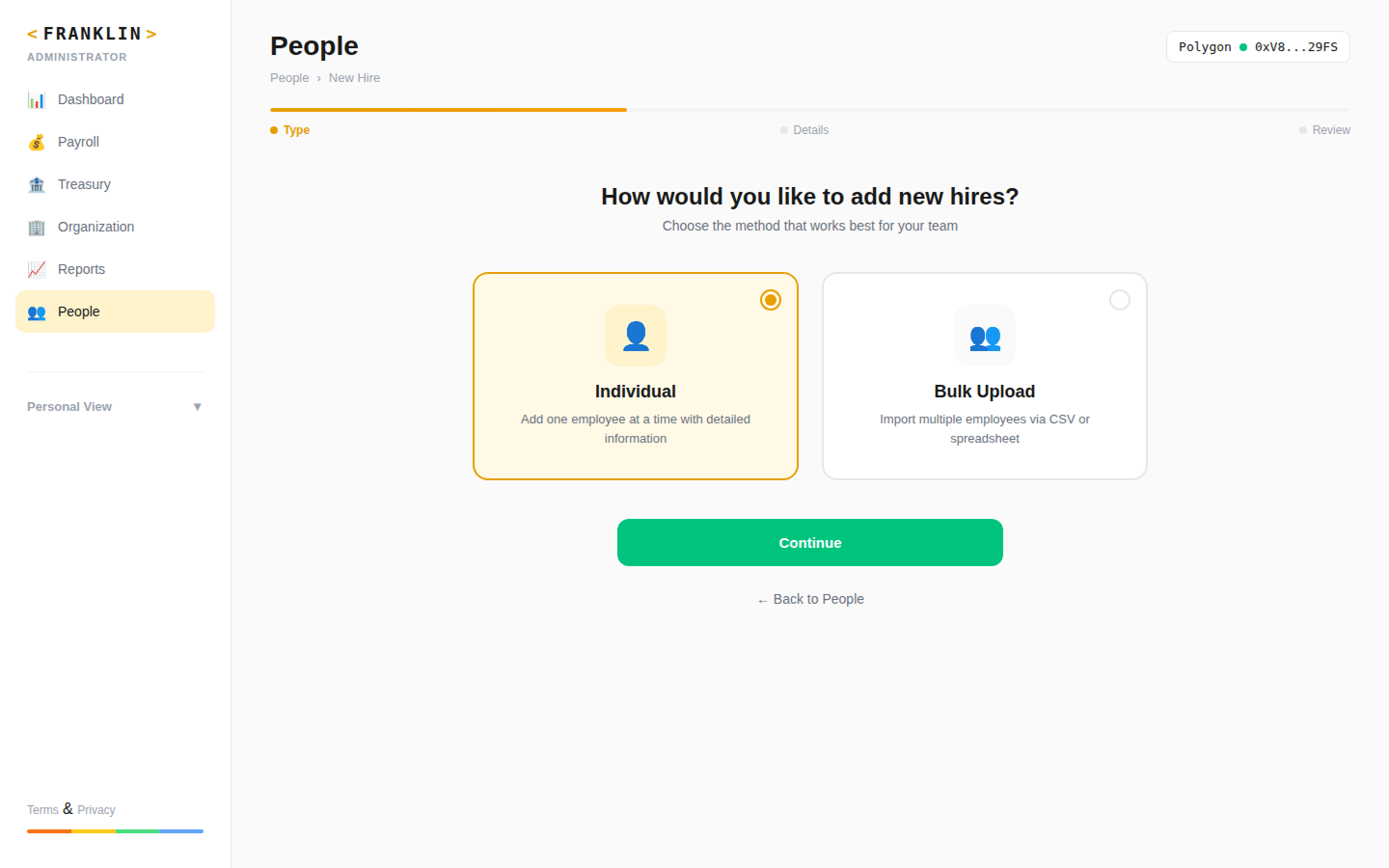
For HR/Admins (Dashboard)
- Employee payment management
- Reporting tools
- Fund management (ensuring enough balance to pay employees)
- Complete management system for payroll operations
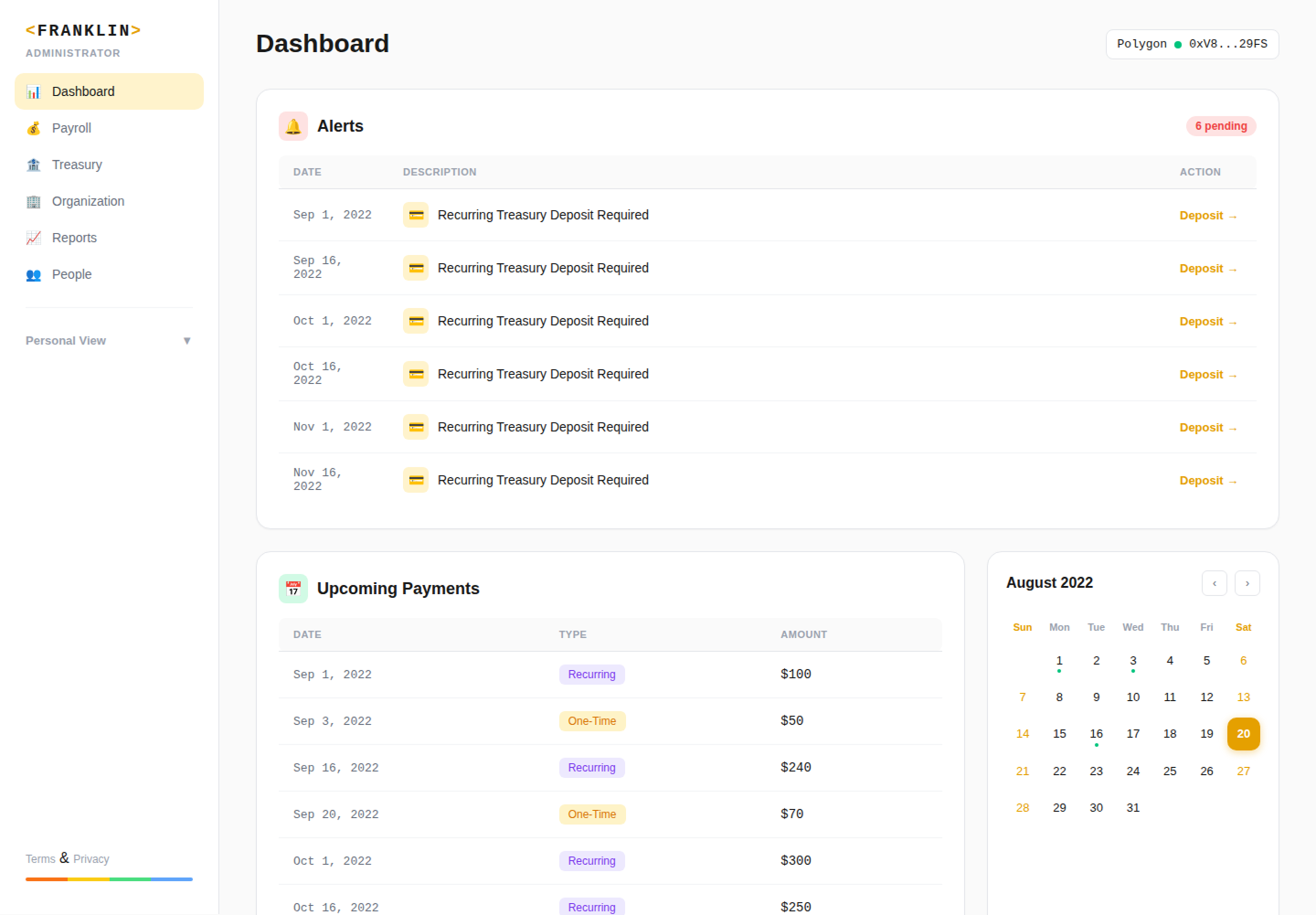
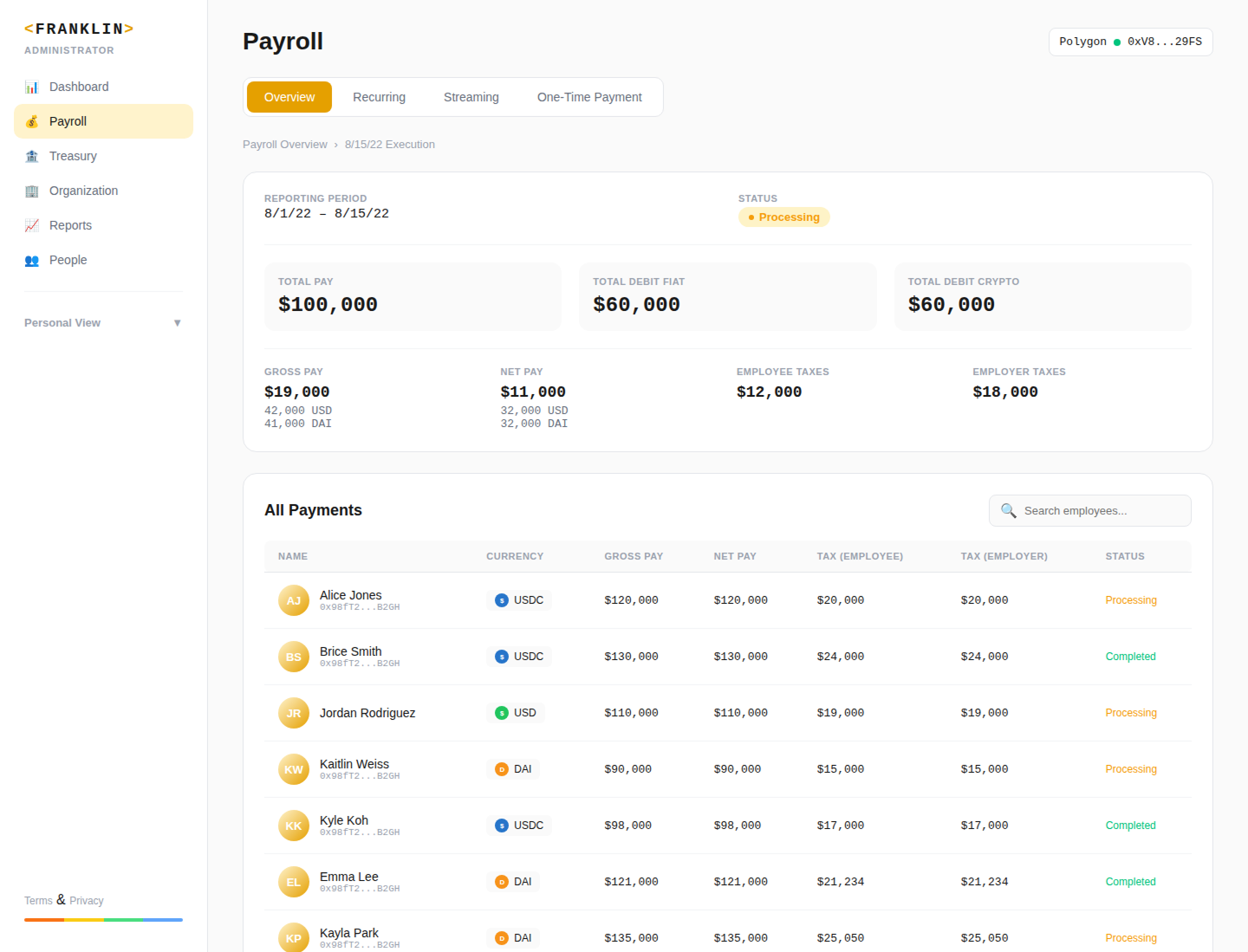
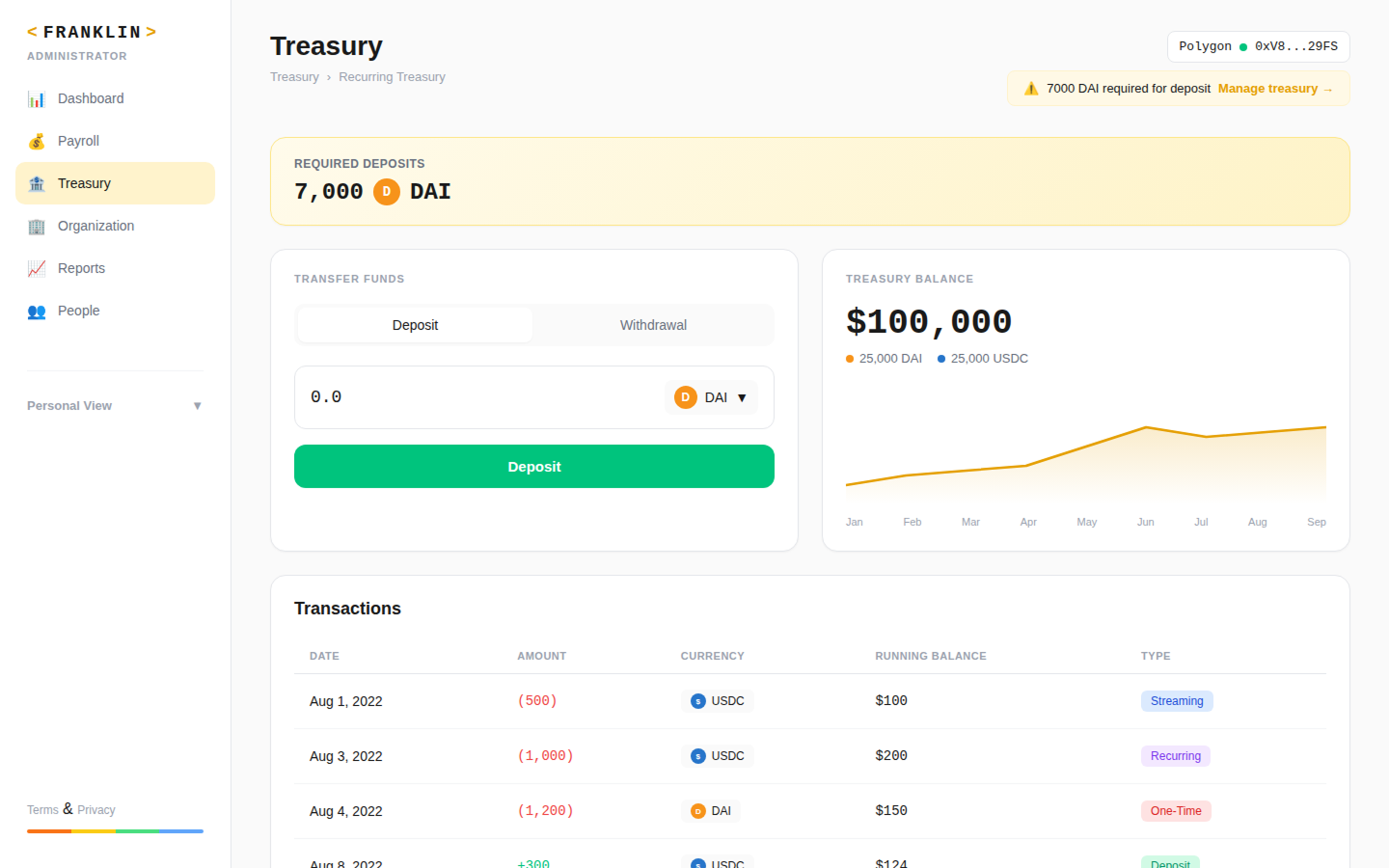
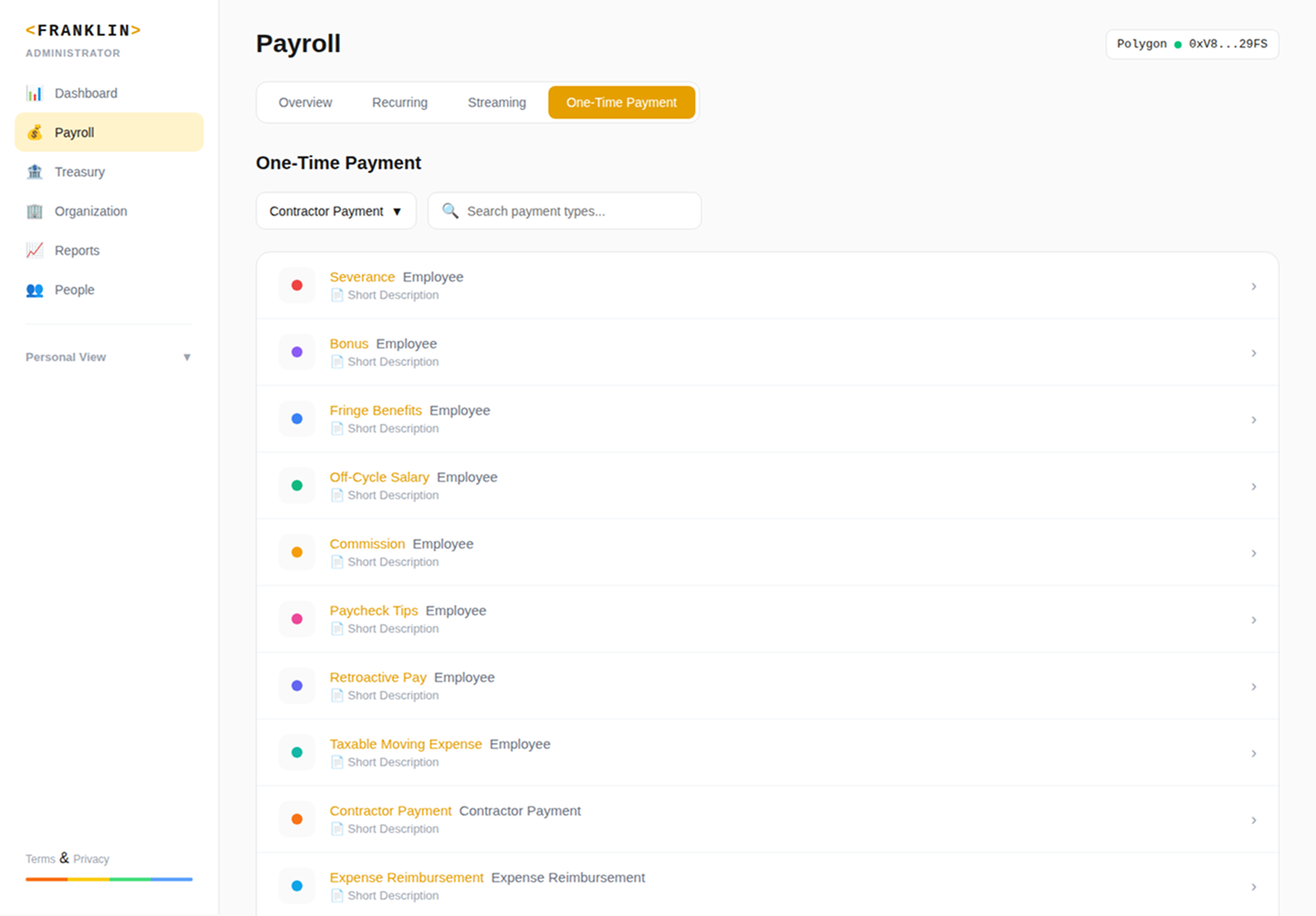
My Process
- Daily calls with founders to understand features and how they connected
- Sketches and ideation
- User flows
- Grayscale wireframes
- High-fidelity prototypes
- Design system and component library for scalability
The Constraints
The founders had deep experience in HR/payroll—they already understood the industry and had validated the problem. My job wasn't to do discovery research; it was to translate their vision into a usable product, fast.
The Challenge
Understanding the industry and the technical complexity of crypto payments. This wasn't a simple CRUD app—it involved blockchain transactions, streaming payments, multi-currency management, and compliance considerations.
Results
My designs were used to raise $2.9M in seed funding.
What I'd Do Differently
I would have pushed for usability testing with HR professionals to validate:
- Which features matter most
- Most efficient interaction patterns
- Usage priorities
The founders had strong hypotheses from their industry experience, but real user data would have made the design decisions more intentional and defensible.