The Problem
Everyone needs a job—it's one of the biggest stressors in life. Yet the hiring process is broken on both sides.
For Job Seekers
- Mass applying into the void, never knowing if applications are seen
- Resumes don't showcase who they really are
- The process is emotionally and mentally draining—everything is on the line
- People stay in jobs that aren't right for them because finding a new one feels impossible
For Employers
- Sorting through resumes manually is time-consuming
- They're making critical hiring decisions based on incomplete information
- They only see a small subset of candidates, not the best overall
- In hospitality, they're asking the same interview questions over and over
- Personality and culture fit are the most important factors—but they're the last things revealed in the interview process
- The restaurant industry has the highest turnover rates of any industry in the United States
My hypothesis: The world is full of opportunities. It's the lack of technology creating the right connections that's the problem.
The Solution
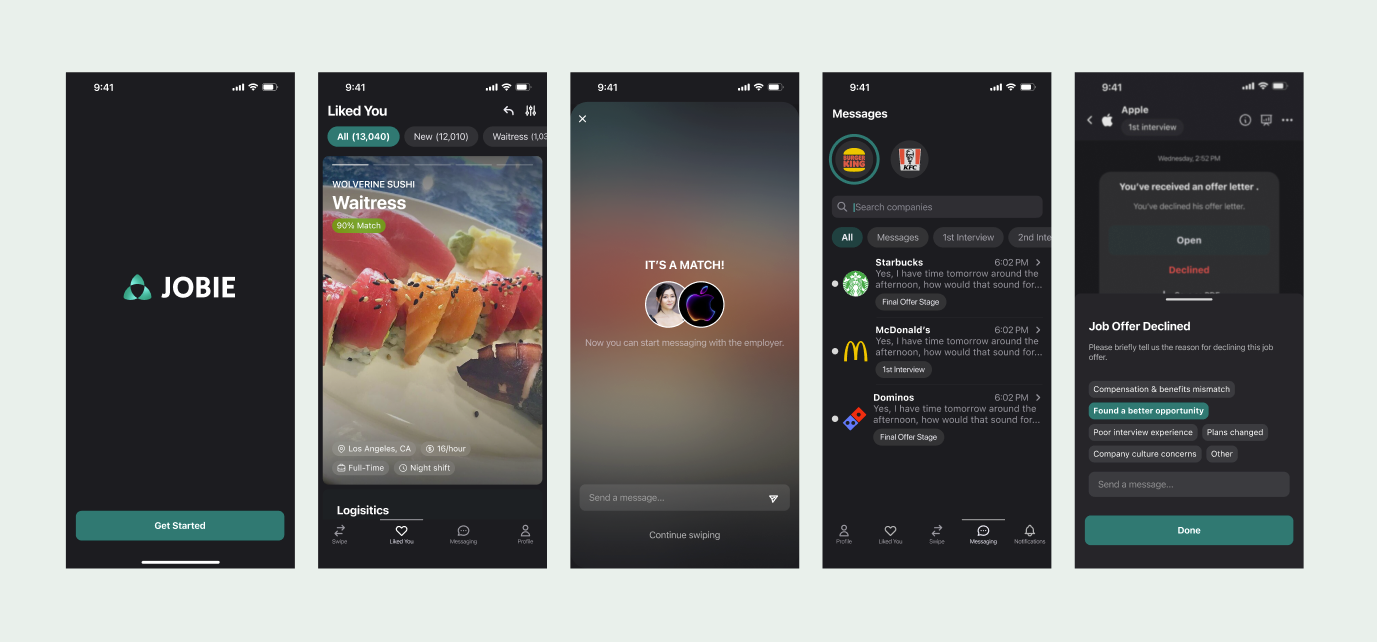
I designed a system to compress the entire interview and hiring process into the smallest possible effort.
For Job Seekers
- Show their full story, not just a resume
- Highlight their situation (student looking for side income, career professional, etc.)
- Answer common interview questions upfront via video/text
- Showcase personality and communication style
For Employers
- Filter by logistics first (location, availability, experience type)
- See a holistic view of each candidate before any calls
- Get answers to their standard interview questions without scheduling anything
- Save up to 14 hours per candidate they want to hire
- Find the best possible candidate—not just the best from the small batch of resumes they had time to review out of hundreds of applications
I created a mobile app for job seekers and a web app for employers. This decision was intentional:
- Mobile for job seekers: Most job seekers in hospitality don't use computers regularly—they're mobile-first users who do everything on their phones.
- Web for employers: Employers need to see more information on one screen without excessive scrolling. Through usability testing, I found that the desktop experience made it significantly easier to review candidates and make decisions quickly.
Employer Web App

I went through multiple iterations and continuously refined the feature set to focus on what mattered most.
My Process
Here's the journey of how I arrived at this solution:
Branding Mood Board
Before diving into the product, I defined the visual identity. Here's the mood board that inspired Jobie's branding—the energy, colors, and feeling I wanted the product to convey.
The Pivot
I started building for the tech industry—trying to solve problems like repetitive design challenges and better ways to showcase skill proficiency. After 6-7 months, I realized the technical lift was too heavy and the problem had too many nuances.
Then I noticed people around me were interested in the product for hospitality. I interviewed 20+ restaurant owners and managers and discovered the same core problem existed—but with less variation and a clearer path to solve it.
Research Insights
I conducted 50+ user interviews with job seekers, restaurant owners, and hiring managers.
Job Seekers
The process is exhausting because they're in survival mode. They're not just looking for income—they're deciding how they'll spend the majority of their waking hours. Resumes feel limiting; they want to show who they actually are.
Restaurant Owners/Managers
Hiring feels like "shooting in the dark." What matters most—personality, reliability, and culture fit—isn't on a resume.
- Staff directly impacts customer experience, and repeat customers drive 50–70% of restaurant sales
- The restaurant industry has the highest turnover of any U.S. industry—100–130% annually at quick-service restaurants
- Each turnover costs ~$2,000, making bad hires expensive
They don't have hours to spend finding candidates, but it's one of the most critical decisions they make.
Key insight: In hospitality (outside fine dining), logistics and personality matter more than technical skill. But that information isn't available until after phone screens and first interviews—wasting everyone's time.
Go-to-Market Strategy
Beyond building the product, I developed strategies to build brand awareness and connect with our target users.
The Jobie Podcast
I created a podcast to have meaningful conversations with industry leaders, including:
- Mark Treptow, VP of Franchise Sales & Development in the US at Gong Cha
- Former manager of multiple Denny's locations

These conversations helped establish credibility and provided valuable insights into the industry's challenges from leadership perspectives.
Hospitality Worker Meetups
I organized in-person meetups for hospitality workers in Downtown LA. These events served a dual purpose:
- Brand awareness: Building community and getting Jobie in front of our target users
- User research: Having intimate conversations with users to understand their pain points and perspectives on a deeper level than surveys or formal interviews could provide
Non-Profit Partnership
I partnered with Student Lunchbox, a non-profit organization, to expand our reach and connect with the community.
Results
Traction: Subway, Chick-fil-A, and Molly's Cupcakes actively using the platform. Dozens of successful hires. Partnerships with local non-profits. Hosted hiring mixers. 500+ waitlist signups from flyers alone.
Challenges & Learnings
Biggest challenge: Not having a technical co-founder. Development was the bottleneck—I had to work around my own technical limitations.
Marketplace dynamics: The classic chicken-and-egg problem. No jobs means no job seekers. No job seekers means no job listings.
Industry headwinds: LA restaurant industry is struggling with low profits and slowing sales, which means less hiring overall.